PITTSBURGH, April 21 – The longer women breastfeed, the lower their risk of heart attacks, strokes and cardiovascular disease, report University of Pittsburgh researchers in a study published in the May issue of Obstetrics & Gynecology.
“Heart disease is the leading cause of death for women, so it’s vitally important for us to know what we can do to protect ourselves,” said Eleanor Bimla Schwarz, M.D., M.S., assistant professor of medicine, epidemiology, and obstetrics, gynecology and reproductive sciences at the University of Pittsburgh. “We have known for years that breastfeeding is important for babies’ health; we now know that it is important for mothers’ health as well.”
According to the study, postmenopausal women who breastfed for at least one month had lower rates of diabetes, high blood pressure and high cholesterol, all known to cause heart disease. Women who had breastfed their babies for more than a year were 10 percent less likely to have had a heart attack, stroke, or developed heart disease than women who had never breastfed.
Dr. Schwarz and colleagues found that the benefits from breastfeeding were long-term ? an average of 35 years had passed since women enrolled in the study had last breastfed an infant.
“The longer a mother nurses her baby, the better for both of them,” Dr. Schwarz pointed out. “Our study provides another good reason for workplace policies to encourage women to breastfeed their infants.”
The findings are based on 139,681 postmenopausal women enrolled in the Women’s Health Initiative study of chronic disease, initiated in 1994
Saturday, August 28, 2010

Thursday, August 26, 2010
Stressed out: Studies show babies become anxious if ignored for even two minutes by mother

Stressed out: Studies show babies become anxious if ignored for even two minutes by mother
By Fiona Macrae
Stressed: Babies deprived of attention become worried and anxious, says new Canadian research
They may have barely mastered sitting up by themselves.
But six-month-old babies become stressed out when they don't get the attention they feel they deserve.
Levels of the stress hormone cortisol soar when they are ignored by their mother, and even a day later they are worried about the same thing happening again.
A baby who is deprived of its mother's love for just two minutes is anxious about being ignored again the next day, a study found.
Experts in child development said that repeated episodes of stress could have a huge effect on a youngster's health and on his or her course in life.
To investigate whether six-month-olds are capable of anticipating trouble, the Canadian researchers invited 30 mothers and babies into their laboratory and divided them into two groups.
Babies were placed in car seats and their mothers played with them and talked to them as normal.
The play was then interspersed with two-minute periods in which the mother simply stared over her child's head, keeping her face free of emotion.
The next day, she took her child back to the laboratory. Levels of cortisol were measured several times on both days. Amounts of cortisol shot up when the babies were ignored.
They then fell off, before rising again when the youngsters were taken back into the laboratory, despite them not being ignored on the second day.
A second group of babies went through the same process, but without being ignored at any time, and their hormone levels barely changed.
The findings suggest that being taken back into the laboratory led the youngsters who had been ignored to anticipate there being more trouble ahead, the journal Biology Letters reports.
Researcher Dr David Haley, of the University of Toronto, said: 'The results suggest that human infants have the capacity to produce an anticipatory stress response that is based on expectations about how their parents will treat them in a specific context.'
Professor Jay Belsky, of Birbeck College, University of London, said factors such as depression could affect a mother's relationship with her baby and send cortisol levels soaring time and time again.
This could lower a baby's immune system, while a troubled upbringing may also mean the child going on to become a less than perfect parent itself.
Read more: http://www.dailymail.co.uk/health/article-1305892/Six-month-old-babies-stressed-ignored-minutes-mothers.html#ixzz0xhfRhBqt
Mother donated breastmilk to premature baby after her child died

Mother donated breastmilk to premature baby after her child died
August 24, 2010
By Alan Bavley
KANSAS CITY, Mo.—As she was getting ready to leave the hospital last week with her baby, a tearful Jennifer Robinson knew how to measure generosity.
All she had to do was turn and look at Nicole Hendrix, the woman who had helped the premature baby, Max, to thrive against the odds.
Hendrix had donated her breast milk—gallons of it—to Max after his mother couldn’t make any more.
It was a personal gift the hospital had never seen before.
Hendrix had been saving frozen milk for her own preemie daughter, Lillian. Lilli, as she was called, died before she could get much more than a little of it.
After multiple surgeries and four anxious months in intensive care, Max finally was healthy enough to leave Overland Park Regional Medical Center in Overland Park, Kan. He weighed in at a substantial 8 pounds, 13 ounces.
Hendrix was there to see him off.
“It makes me feel that something good can come out of something bad,” she said.
Robinson said she was overwhelmed by Hendrix’s generosity.
“With so much going on with their lives they would think of us,” the Olathe, Kan., woman said. “It was like they gave him an organ, something that could save his life.”
Overland Park Regional neonatologist Kathleen Weatherstone said the donation played a role in keeping Max alive.
Max was born on April 16, four months premature. Lillian was born March 4, also four months early.
Both babies suffered from a condition called necrotizing enterocolitis, where blood circulation was cut off to portions of their bowel. It occurs most commonly among extremely premature infants.
Breast milk is believed to be protective against necrotizing enterocolitis, Weatherstone said. And it’s the best-tolerated milk for infants recovering from the condition.
Often it’s difficult, though, for mothers of preemies to give their babies milk. Either their body isn’t ready to produce milk or the stress of dealing with a critically ill child keeps the milk from flowing.
At first, Robinson, 41, was able to provide Max with breast milk. She had breast-fed her two other children. But she soon began to run dry.
“It was really frustrating,” Robinson said. “As a mom, breast milk was one of the only things I could give him to help him.”
Robinson searched for breast milk banks that provide babies with milk from donor mothers. But insurance plans don’t always cover the charges. She calculated that it could cost thousands of dollars per month.
That’s when Robinson and Hendrix’s stories began to intertwine.
Every three hours every day—at home, at work, even at church—Hendrix had been faithfully pumping her breast milk and freezing it, anticipating the day when Lillian would need it.
“The nurses every day said keep going,” Hendrix, 29, said. “It wasn’t fun, but I did it.”
For 10 weeks, she saved her milk. So much milk that the Hendrixes had to buy a freezer to keep in the garage of their Kansas City home.
But Lillian’s persistent medical problems gave her few opportunities to take any of her mother’s milk. Her condition became so serious she had to be transferred to the University of Kansas Hospital in Kansas City, Kan., where she died in May.
After Lillian’s death, Hendrix went back to Overland Park Regional to pick up things left behind. She thought of the breast milk at home in the freezer.
“It would have made me sick to throw it out,” she said.
Hendrix asked a nurse in the intensive care unit if she could donate her milk. Word got back to the nurse that Robinson’s baby needed breast milk, and the nurse told Hendrix.
“This was a no-brainer,” Hendrix said. “I feel I would have regretted it if I didn’t. I feel I’ve given meaning to my daughter’s life, if this can help save Max.”
The hospital had never arranged to have a mother donate milk to one of its patients. Doctors insisted that Hendrix be tested for HIV, hepatitis and other infections before Max could have her milk.
When Hendrix turned the milk over to Robinson, it filled a large rolling cooler and three small plastic foam coolers.
Robinson brought plastic bags of frozen milk to the hospital for the nurses to defrost and give to Max.
Before sharing the milk, the Robinsons and Hendrixes barely knew each other.
Hendrix recalls that she and her husband, Shannon, ran into Robinson and her husband, Troy, in the parents’ room at the hospital.
“They were worried and we were listening,” she said. “Their son was going through a lot of what we went through.”
Now the families have become friends. Hendrix visited Max several times in the hospital and was one of the first people to get to hold him.
“We instantly felt we had a connection,” Robinson said. “If it weren’t for Lilli, Max would not be here. Her little life made a huge impact on his. Someday, he’ll know about Lilli and how selfless her mother was."
Friday, August 6, 2010


Monday, July 19, 2010
Soy Formula Unsafe for Babies
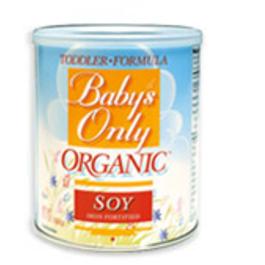
Soy Formula Unsafe for Babies: Myths and Truths About Soy
July 16, 2010By Augie
Avoid Soy Products– Especially Baby Formula
UPDATE: Did you know that Health Departments all over the nation are now promoting raw milk. I have seen billboards about the benefits? The raw milk I am referring to is human breast milk! When breastfeeding is not possible, health care folks recommend formula–including soy formula. The American Dental Association warns NOT to mix fluoridated city water with dehydrated formula mix due to the toxic effects of the fluoride. But Gerber continues to add fluoride to bottled water for babies as parents erroneously believe it prevents cavities. But when it comes to soy formulas, I wanted to rerun this article tonight.– Augie
____________
I don’t know about you, but I like most Myths and Truths articles. They are easy to read and sets things in contrast to what we have been told. I just hope the attorneys at the ADM corporation does not sic their PR staff on me. I don’t think the nasty soy cartel will appreciate this article, especially the part that soy formula for babies is not safe.Oh. I almost forgot. Most soy beans are genetically modified. (Article courtesy of The Weston A. Price Foundation– a fabulous site on nutrition)
Myths & Truths About Soy
NOTE: These Myths & Truths as well as our summary of soy dangers are provided on our Soy Alert! trifold brochure (PDF). You may print this at home or at a copy store for mass distribution. If you wish, you can order quantities of professionally printed two-color trifold brochures for 25 cents each by using the Order Form.
Myth: Use of soy as a food dates back many thousands of years.
Truth: Soy was first used as a food during the late Chou dynasty (1134–246 BC), only after the Chinese learned to ferment soy beans to make foods like tempeh, natto and tamari.
Myth: Asians consume large amounts of soy foods.
Truth: Average consumption of soy foods in Japan and China is 10 grams (about 2 teaspoons) per day. Asians consume soy foods in small amounts as a condiment, and not as a replacement for animal foods.
Myth: Modern soy foods confer the same health benefits as traditionally fermented soy foods.
Truth: Most modern soy foods are not fermented to neutralize toxins in soybeans, and are processed in a way that denatures proteins and increases levels of carcinogens.
Myth: Soy foods provide complete protein.
Truth: Like all legumes, soy beans are deficient in sulfur-containing amino acids methionine and cystine. In addition, modern processing denatures fragile lysine.
Myth: Fermented soy foods can provide vitamin B12 in vegetarian diets.
Truth: The compound that resembles vitamin B12 in soy cannot be used by the human body; in fact, soy foods cause the body to require more B12
Myth: Soy formula is safe for infants.
Truth: Soy foods contain trypsin inhibitors that inhibit protein digestion and affect pancreatic function. In test animals, diets high in trypsin inhibitors led to stunted growth and pancreatic disorders. Soy foods increase the body’s requirement for vitamin D, needed for strong bones and normal growth. Phytic acid in soy foods results in reduced bioavailabilty of iron and zinc which are required for the health and development of the brain and nervous system. Soy also lacks cholesterol, likewise essential for the development of the brain and nervous system. Megadoses of phytoestrogens in soy formula have been implicated in the current trend toward increasingly premature sexual development in girls and delayed or retarded sexual development in boys.
Continue reading: There are more doozies at http://westonaprice.org/mythstruths/mtsoy.html

Tuesday, July 13, 2010


Subscribe to:
Posts (Atom)